


Brake Pads Explained: The Complete Beginner’s Guide
The invention of wheels is considered one of the most important breakthroughs that changed the world. According to many, the second most significant invention would be the creation of brake pads, as, without them, it is impossible to reach anywhere safely.
Cars would become obsolete, and there would be no safe way to utilise friction between the clamp and rotors without altogether wearing out the braking system.
It’s a significant invention that changed the landscape of driving itself. Brake pads are a crucial component that must be adequately maintained for long journeys.
In this blog, let’s learn about brake pads, how they operate, and everything there is to know about them.
What is a Brake Pad?

The technology and engineering behind brake pads involve an incredibly complex process. However, the fundamentals of how they operate are simple. A brake pad is a flat steel with a thick friction material on one side. When they come into contact with the brake rotor, it creates immense friction, generating significant heat and converting kinetic energy into thermal energy.
This process results in immediate deceleration, bringing the car to a complete halt, depending on the amount and force of the contact. Brake pads are essential components that require consistent attention and care from the car owner.
How Does The Brake Pad Operate?
The braking process is an incredible showcase of physics and pure material engineering designed to withstand extreme pressures. For car owners, it is essential to understand how much more efficiency and braking power can be achieved by improving brake pads.
Let’s now learn about the mechanical journey of what happens during the braking process:
- The driver applies pressure to the brakes.
- A signal is sent to increase hydraulic pressure within the master cylinder.
- The brake components are lubricated for smooth operation.
- Brake fluid is transferred through the lines to the callipers.
- The brake callipers house the brake pads, and hydraulic pressure is converted into mechanical force.
- The increased pressure causes the calliper pistons to extend.
- Finally, the clamp extends to the brake rotors to apply kinetic pressure to stop the rotors.
Different Types Of Materials Used In The Braking Pad
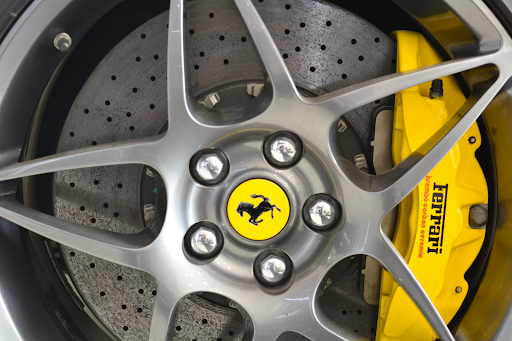
No brake pad is alike, as various tiers, ranging from performance-oriented pads for track performance to moderate options for regular driving, are available for selection. It is essential to understand the different options to understand the market better and make a choice tailored to your needs.
Let’s break down the tier list of brake pads that can be installed in your car.
- Organic Materials: These brake pads are the most affordable and softer than other metallic or carbon-type brakes. Initially, they used to be made of asbestos, but they have been phased out in favour of a more eco-friendly mix of Kevlar, rubber, fibreglass, and organic compounds held together with resin.
These brake pads are an excellent low-cost option for regular driving and have a mild impact on brake rotors compared to other pads. However, the downside is that they generate a lot of dust and wear out quickly. - Semi-Metallic Materials: These brake pads are made of a composite alloy containing iron, copper, and steel wool. They offer higher durability, high-temperature resistance, and better braking performance than organic brake pads.
They perform reasonably well in low temperatures but produce a significant amount of dust and can wear out the rotors quickly. - Fully Metallic Materials: These brake pads are favoured by enthusiasts and professional car racing drivers for high-performance scenarios. Many variants of these brakes do not include synthetic materials for maximum friction and provide the highest braking force in competition.
However, fully metalic pads are rarely seen on the road as they can be noisy, less durable, and wear out the rotors quickly. - Ceramic Materials– Ceramic brake pads are considered the best in their category, effortlessly balancing durability and performance in a unified package. They are made of ceramic and incorporate materials like copper and metallic fibres to enhance durability. Their significant benefits include being quiet, generating minimal dust, and having high durability.
The only downsides are their low weather resistance and relatively high cost due to being highly desirable.
How Brake Pad Can Influence Fuel Efficiency
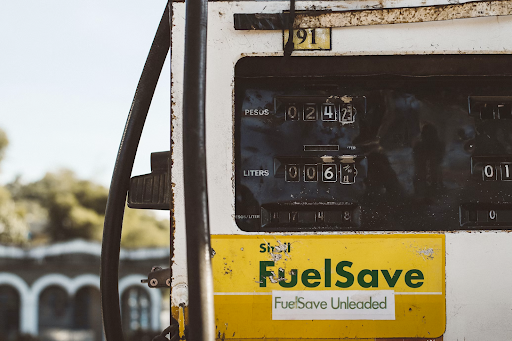
When aiming for fuel efficiency, most drivers prioritise tuning their engines and making aerodynamic modifications. Car enthusiasts can engage in endless discussions about which tire size provides the best fuel efficiency. But often overlook the impact of braking on fuel efficiency.
Excessive acceleration and braking can increase fuel consumption by as much as 33 percent. Furthermore, a critical issue to consider is brake drag, a scenario where the brake pads remain in constant contact with the rotors even when the brakes are not applied.
A recent BRAKE report calculated that brake drag can lead to additional fuel consumption of a gallon for every 90 miles driven. Therefore, ensuring that your brake pad is well-maintained, and brake drag does not go unnoticed is essential.
A optimised braking system is crucial for better fuel efficiency and increasing the life of tires.
Also read: How to Fix a Car’s Anti-Lock Brakes?
Is It Time To Change Your Brake Pads?
Traditionally, car experts advise changing your car’s brake pads at 50,000 miles. However, this number can be somewhat arbitrary, as various factors can lead to an increase in brake pad wear, such as:
- The size of the car can exert more significant pressure on the brake pads.
- The type of brake pad materials used.
- Driving style, whether in a metropolitan city or on highways.
- The time gap since the last brake pad replacement.
It is recommended that the brake pads should be checked at specific intervals, such as annually or on a bi-annual basis. Acton’s car brake repair service comprehensively asses the brake pads, rotors, and all the other components.
If you are noticing any of these signs, it might be time to change the brake pads immediately:
- A loud screeching sound is emitted when hitting the brake pedal.
- A warning light is on for brake repair.
- Strange noises occur when braking that don’t happen under ideal conditions.
- Brakes don’t feel as effective, and the car’s stopping distance is extended.
- The brake pedal feels harder to press.
How To Replace A Break Pad?
It is recommended to leave brake pad replacement to experienced professionals. However, if you are up for a DIY (Do-It-Yourself) challenge, here is a guide to replacing the brake pad:
- Use the jack stored in the vehicle’s trunk to lift it. Remove all the nut bolts from the wheels.
- Remove the guide pin bolt using a spanner and unscrew the bolts.
- Ensure that the brake pads and their mounting brackets are correctly positioned.
- Remove the old brake pads from both sides of the rotors and pay attention to their position for easier installation of the new pads.
- Check the brake disk for any damage.
- Release the pressure on the brake fluid reservoir cap. As you tighten the clamp, the brake fluid will start overflowing.
- Check if the clips in place are damaged, and if so, consider replacing them.
- Lubricate the edges – ensuring that the edges and the new brake pads are correctly lubricated to lock in place.
- Now it’s time to fit the new brake pads – ensure they are correctly installed.
- Take the car for a test drive to evaluate the braking system’s performance and check whether it functions correctly.
- If you encounter issues, re-evaluate your work to ensure all steps were performed correctly and in order.
Getting It Done By The Mechanic
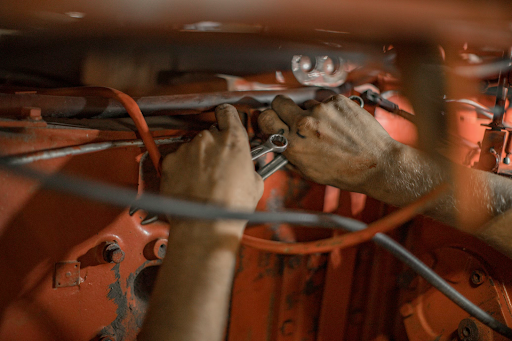
While the DIY solution is quite enticing, the reality is that without proper tools and experience, it is unsafe to experiment with brake systems. It would be best to look for a professional car brake repair option.
Here are certain things to keep in mind when getting it checked by the mechanic:
- Is the brake fluid properly levelled?
- Are the brake lines functioning correctly?
- Is the suspension adequately aligned?
- Are the brake rotors adequately aligned?
- Is the wheel bearing correctly in place?
- Are there any worn-out components that require replacement?
Ensure all these items are properly maintained, and the mechanic should conduct a thorough inspection before you receive your vehicle. The average cost should be around $150 to $300.
FAQs
Q1) How Do You Maintain Brake Pads?
Ans: To maintain brake pads, brake gently, accelerate calmly, perform regular maintenance checks, and invest wisely in high-quality ones.
Q2) Are Ceramic Or Metallic Brake Pads Better For Towing?
Ans 2: For towing, it is recommended to use semi-metallic brake pads as they provide an all-around solution for dealing with extreme weight and harsh conditions.
Among all the options for brake pads, semi-metallic ones consistently offer the best balance of durability, price, and braking capability.
Q3) Should You Upgrade Your Brakes?
Ans: You should consider upgrading your brakes if the stock brakes are not providing the necessary resistance for your driving conditions and are wearing out frequently.
Conclusion
Brake pads are often an overlooked component in upgrading and maintaining a car. A good pad can significantly enhance performance, durability, and fuel efficiency in any driving condition.
Brake pads wear out over time, and other issues might arise over time, so it’s essential to keep a keen eye on how the brakes are operating. Select the brake pad materials that best suit both tropical and cold environments.
Driving conservatively and scheduling regular check-ups is sufficient for most drivers to keep their brake system in optimal condition.



Leave a Message
You must be logged in to post a comment.